THE INSTRUMENT
A tube of gas and a click
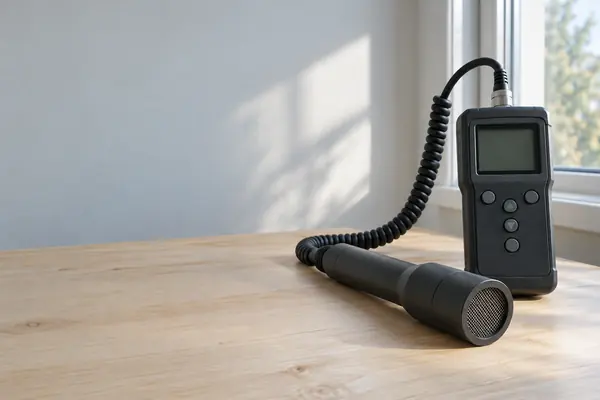
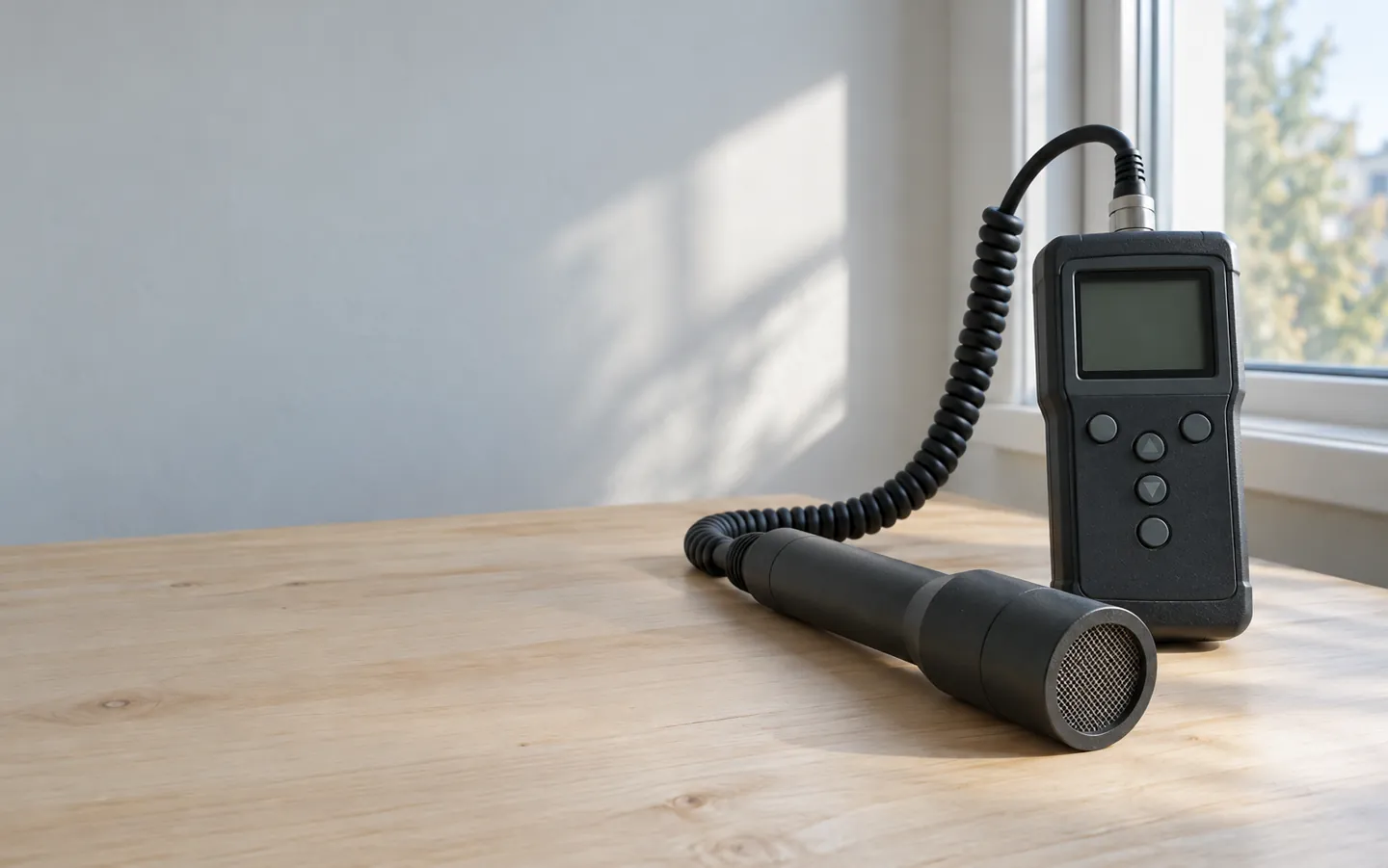
A Geiger–Müller tube holds an inert gas at low pressure under a high voltage. When radiation ionises the gas, the tube briefly conducts and makes a pulse, which the counter shows or clicks.
How it works doodlecounter
2.6 mSvUK average a year
A Geiger counter turns each passing particle or gamma ray into a click. Most of what it hears is natural: rocks, soil, food and space. UK health figures show how small everyday doses are, and where the biggest share comes from.
Updated
THE SHORT ANSWER
Background radiation is everywhere.
Where you live and what you do changes how much you get.
THE INSTRUMENT
A Geiger–Müller tube holds an inert gas at low pressure under a high voltage. When radiation ionises the gas, the tube briefly conducts and makes a pulse, which the counter shows or clicks.
How it worksTHE GROUND
Radon is a colourless, odourless gas formed from the uranium found in all rocks and soils. UKHSA says the average level in UK homes gives us half our radiation exposure.
See the numbersTHE SKY
Cosmic radiation comes from energetic particles from the sun and stars. The US EPA says the higher the altitude, the higher the dose. A transatlantic flight is about 0.08 mSv.
Compare dosesA QUICK DOSE CHECK
Pick an everyday source to see its dose from UKHSA's comparison table. The bar shows how it compares with the UK average yearly dose of 2.6 mSv.
Doses from UKHSA, Ionising radiation: dose comparisons. General information only, not personal health advice.
TWO NUMBERS WORTH KNOWING
One figure for the average yearly dose in the UK,
one for how much of it comes from radon.
2.6 mSv
Average radiation dose per person in the UK each year
UKHSA says the largest share comes from naturally occurring radiation in homes and workplaces, with significant contributions from natural radioactivity in food and from medical exposures. For comparison, the US average is 6.2 mSv.
YEARLY DOSE · UKHSA
½ of it
Share of our exposure from the average level of radon in UK homes
The average radon level in UK homes is 20 becquerels per cubic metre of air, and UKradon says that alone gives us half our exposure to radiation from all sources.
RADON · UKHSA
UKradon says that below 100 Bq per cubic metre the individual risk from radon remains relatively low, but the risk rises as the level rises. A measurement pack gives a home's yearly average level.

INSIDE A GEIGER COUNTER
A Geiger counter has two parts: the Geiger–Müller tube that senses radiation, and the electronics that turn its pulses into a reading.
Alpha particles, beta particles or gamma rays pass into a tube of low-pressure inert gas such as helium, neon or argon.
The radiation knocks charge loose in the gas. A high voltage, typically 400 to 900 volts, amplifies it into a large pulse.
The electronics show counts per minute or per second, or convert counts to a dose rate in sieverts, and can play a click for each event.
Every pulse is the same size, so the tube cannot tell radiation types or energies apart, and it undercounts at very high rates.
WHERE BACKGROUND COMES FROM
The US EPA explains that most background radiation is natural: uranium and thorium in the ground, radon and thoron gases, and cosmic radiation from space. Our bodies carry traces too, mainly potassium-40 from food and water.
Levels vary from place to place. Areas with more uranium and thorium in the soil generally have higher doses, and cosmic dose rises with altitude, which is why the same counter will click at different rates in different places.

Questions
It detects ionising radiation such as alpha particles, beta particles and gamma rays. It can show a count rate, such as counts per minute, or, with a suitably designed tube, an estimated dose rate.
Background radiation is present all the time. The US EPA says it comes mostly from natural minerals in the ground, soil and water, radon gas and cosmic radiation, with a small fraction from human activities.
UKHSA calculates about 2.6 millisieverts a year on average. The largest share is naturally occurring radiation in homes and workplaces, especially radon.
UKradon describes radon as a colourless, odourless radioactive gas formed by the decay of the small amounts of uranium found naturally in all rocks and soils. It is measured in becquerels per cubic metre of air.
UKHSA lists a transatlantic flight at 0.08 mSv, compared with a UK average of 2.6 mSv a year from all sources. Cosmic radiation increases with altitude.
ABOUT THIS NAME
doodlecounter.com is part of the DoodleSale portfolio. It isn't in an auction right now, but you can ask about leasing it.